AI came up in two major ways at RE+ 2026 this year. The first was expected and a topic at the center of every energy conference this year: how data centers are impacting the energy landscape. But the second was more surprising: how our industry is putting AI to work. Most of our industry is still very early in their AI journey. They are lightly using Copilot, or there is a corporate push to use more Claude, but the return they're seeing at this point sounds inconsequential.
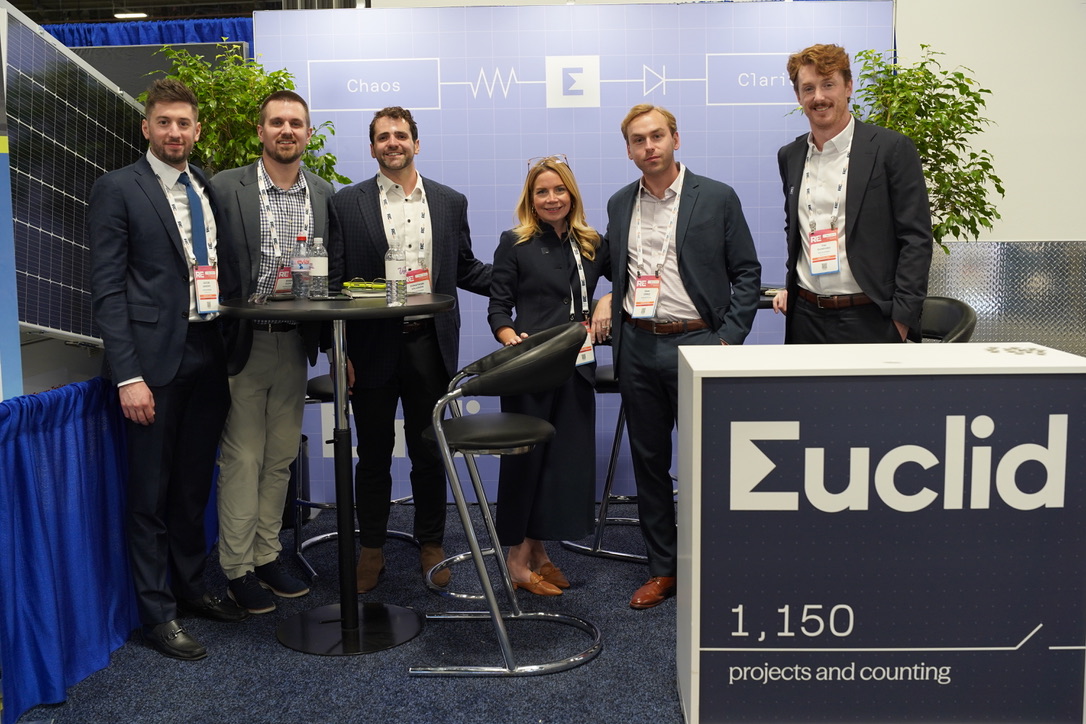
Industry leaders say they don’t trust AI to read policy dynamics, understand relationships, or do deep research. I want to push back on this — if AI’s only job at your company is the work I did in my first internship, you’re leaving most of its value on the table. At minimum, AI is great for summarizing a 100-page interconnection agreement or monthly operating report, but considering we are the industry powering the AI boom, it can, and should, be used to make your hardest work easier.
I understand the hesitation - on domain-specific tasks, general-purpose AI gets things wrong 20-30% of the time, and it does so with confidence. Systems built specifically for solar and storage can push accuracy closer to 95%. That remaining 5% is where expert fact-checking comes in, and for some, that’s the sticking point: if you have to review every figure anyway, is it actually saving you time?
It’s a fair critique of general-purpose chatbots, but not necessarily a reason to avoid giving AI any consequential task. When we built the Euclid platform, every value it extracts points back to the page it came from, and every risk and RFI is accepted, edited, and reviewed by an analyst before it reaches a client. Checking takes seconds instead of hours, and the person whose name is on the work still makes the call.
I would also add that the review runs both ways. A well-built system catches the errors people make too. In this industry, those errors hide in the fine print and can cost millions. We see them at every level of severity. Some are minor, like a permit issued to the wrong entity, requires fixing, but unlikely to be a deal killer. Others are existential, like a late-stage project whose utility studies assumed materially different equipment than what was procured, putting its entire interconnection agreement at risk.
But we're also starting to see the power of AI automating multi-step workflows. Developing or financing projects means constantly updating an array of artifacts: financial models, IC memos, internal trackers, weekly reports, project schedules, budgets based on constantly changing data. A single new document can mean updating information in 12 places. That is the work we're starting to automate with AI at Euclid and it's proving transformative.
The ones who treat AI as a spell-checker will keep missing what’s buried on page 40. The ones who build workflows around their expertise and connect their systems together will move faster, miss less, and will have more time to focus on strategic decisions that create better outcomes.
— Jacob Sandry, CEO
Enjoying this deep dive?
Stay up to date on market insights for teams who build, buy, and finance renewable projects.