How UBS built a defensible PWA compliance record across a 1 GWh ERCOT BESS portfolio
Closing $700+ million in financing across a 5-lender facility, two ITC transfer buyers, and 250,000+ hours of labor verified
.jpeg)
The Energy Storage Investment Fund (ESIF) at UBS launched with an ambitious mandate: build a significant portfolio of utility-scale energy storage assets across North America. Their first portfolio, four BESS projects representing 1 GWh in ERCOT, would only pencil out if the ITC landed in full. This meant strict compliance with the IRA's PWA requirements across every contractor, every trade, and every hour of construction.
Beginning in Q1 2024, Euclid served as the PWA compliance partner for UBS across their portfolio, analyzing over 23,000 time entries spanning 250,000 hours of labor and onboarding 15+ contractors through a single integrated workflow. The result: ESIF transacted on tax credits across all four projects, secured a 5-lender facility with two ITC transfer buyers, and closed $700+ million in deal value within Investment Committee timelines.
PWA compliance is not optional for ITC-eligible projects, but the standards for what "compliant" looks like are set by lenders, tax equity investors, and the IRS — not just by Treasury guidance. IRA policy continued to evolve through the middle of construction, no clear market standard existed for the shape and depth of compliance reporting, and coordination across contractors, EPCs, and capital partners created a constant risk of gaps. Without a defensible record at close, projects risk losing the bonus credit, triggering remediation cycles, or stalling financing entirely.
"Euclid's comprehensive approach to program management has been instrumental in helping us actualize our investment thesis. Their ability to operate as an extension of our team has allowed us to deploy significant capital efficiently while maintaining institutional-grade quality across all aspects of project development and operations."
Mark Saunders / Managing Director, UBS
How UBS works with Euclid
UBS's Energy Storage Investment Fund acquires and develops utility-scale battery storage in high-growth ERCOT markets. The UBS team works with Euclid as their PWA compliance partner from contractor onboarding through final filing.
- Run real-time PWA compliance tracking across every contractor, every trade, and every project, capturing daily time entries with the granularity tax equity investors and lenders require to underwrite the bonus credit.
- Coordinate the full compliance lifecycle from contractor onboarding and apprenticeship program registration through penalty modeling, Good Faith Effort defense, and final reporting at close.
- Deliver financing-ready compliance documentation that gives lenders, ITC transfer buyers, tax equity investors, and legal counsel the defensible record they need to fund the deal.
As a result, the UBS team transacted on the full 1 GWh portfolio's tax credits within their Investment Committee-defined timelines, secured complex financing including a 5-lender facility, two ITC transfer buyers, preferred equity, and specialized insurance, and discovered penalties early enough to save $75K against market remediation costs. Everything was backed by Euclid's PWA compliance infrastructure and a team of compliance, construction, and capital markets experts.
A single PWA compliance engagement, end to end
Here's what Euclid's PWA compliance process looks like for a typical ITC-eligible project with UBS, from contractor onboarding through filing and audit defense.
%201.png)
The process moves through five stages aligned to the construction lifecycle: onboard contractors and establish prevailing wage baselines before mobilization, register apprenticeship programs and ratios at NTP, track certified payroll in real time during construction, consistently track penalty exposure and deliver the financing-ready IRA Labor Compliance Report at filing. Each project's daily labor profile is replicated as a Digital Twin, giving every stakeholder the same view of the compliance record at any point in the project.
While every project has a different contractor mix, supply chain, and construction profile, the workflow stays consistent so ESIF can transact on tax credits at portfolio scale without rebuilding the process for each new project.
1. Onboard contractors and establish prevailing wage baselines
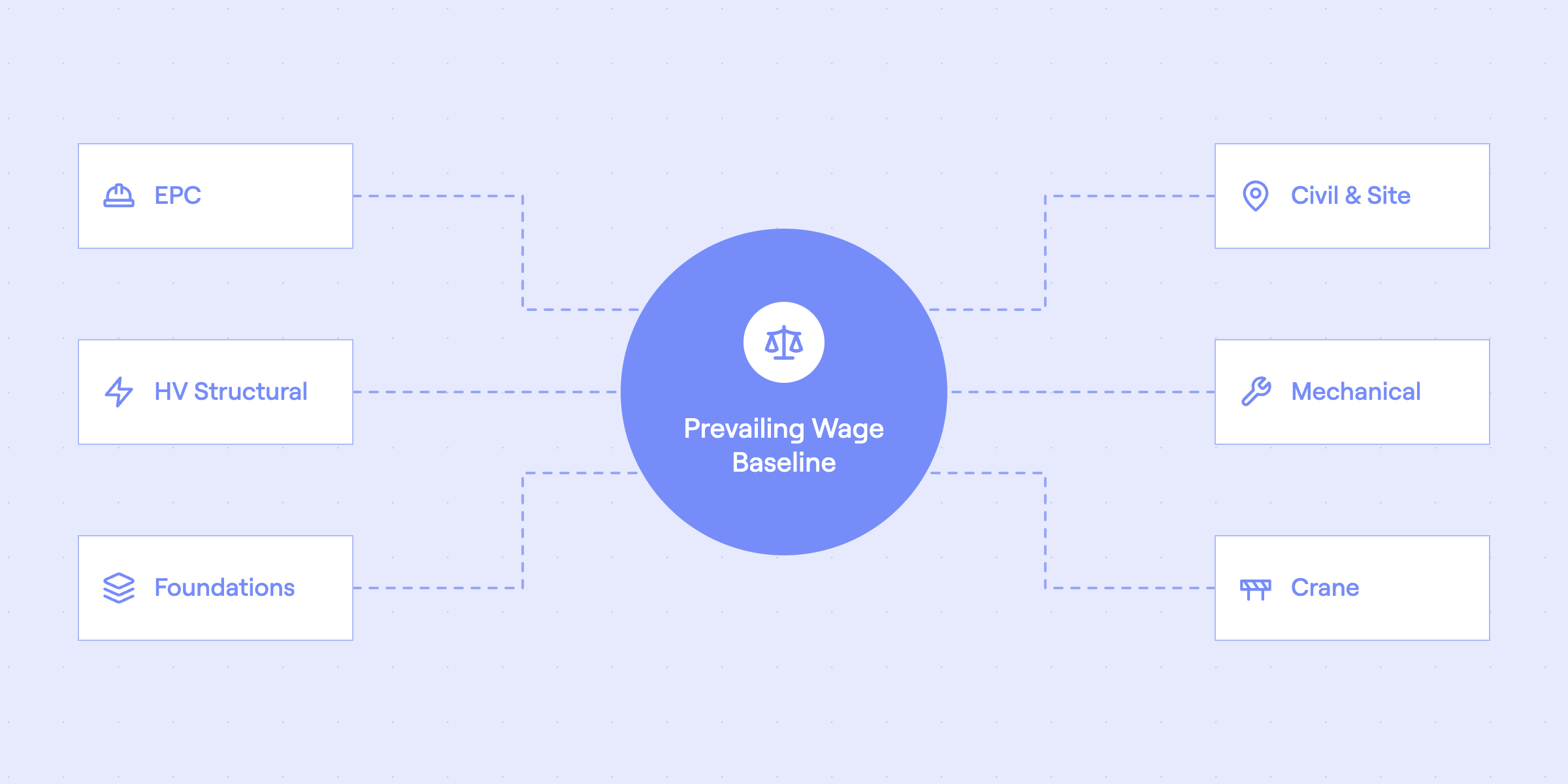
Before mobilization, Euclid registers each contractor in the platform, classifies workers by trade against the applicable DOL wage determination, and establishes the prevailing wage baseline that will govern compliance for the rest of the project. For UBS's ERCOT portfolio, this meant onboarding and vetting 15+ contractors across 5+ distinct trades: EPC, HV structural, foundations, civil and site, mechanical, crane, and GSU supply.
Without a structured onboarding process, prevailing wage compliance starts as a paperwork problem and escalates into a financing risk. Different contractors arrive with different payroll systems, different classification conventions, and different interpretations of what wage determination applies to which scope. Once construction starts, fixing classification errors requires retroactive corrections, recalculated penalty exposure, and uncomfortable conversations with capital partners.
By front-loading classification and baselining into the onboarding workflow, Euclid creates a single contractor record that travels with every time entry, every certified payroll report, and every compliance review for the rest of the project.
2. Register apprenticeship programs and model participation ratios
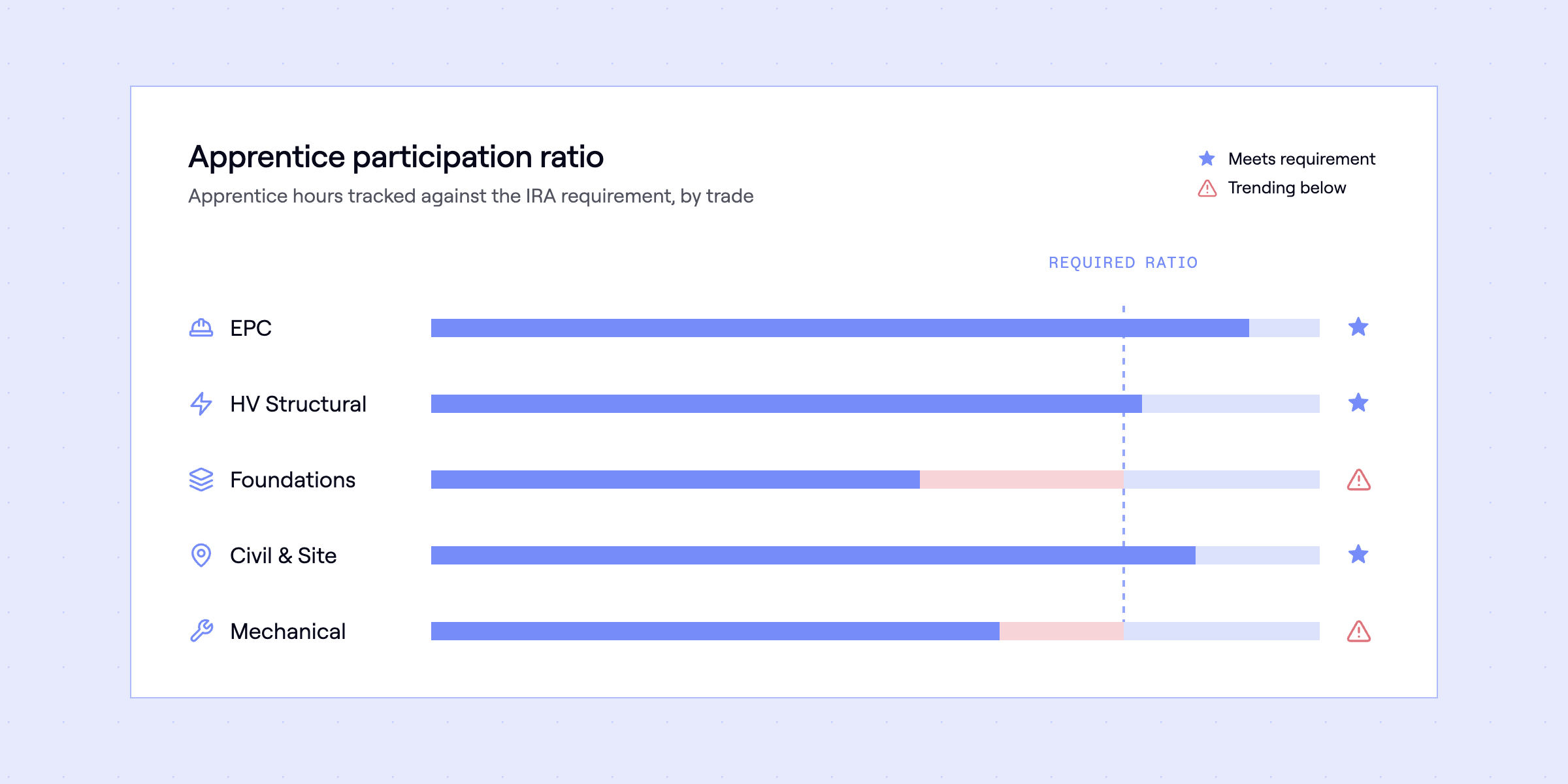
At NTP, Euclid validates apprentice program enrollment for each contractor, confirms registration with the DOL or applicable state agency. The platform tracks apprentice hours, journeyman hours, and ratio compliance in real time across contractors, with weekly visibility into where ratios are trending against requirement.
For UBS's portfolio, Euclid validated apprentice programs and prevailing wage classifications across the full contractor set, surfaced participation gaps early, and modeled the path to full compliance for each trade. Where ratios trended below requirement, the platform flagged the gap and Euclid worked with contractors to adjust crew composition or document Good Faith Efforts before the gap became a material risk at close.
The before-state for this work is well-known to anyone running a labor-heavy project: apprenticeship participation gets reviewed at the end, not in flight, and by the time the gap is visible the remediation window has closed.
3. Track certified payroll in real time across every contractor
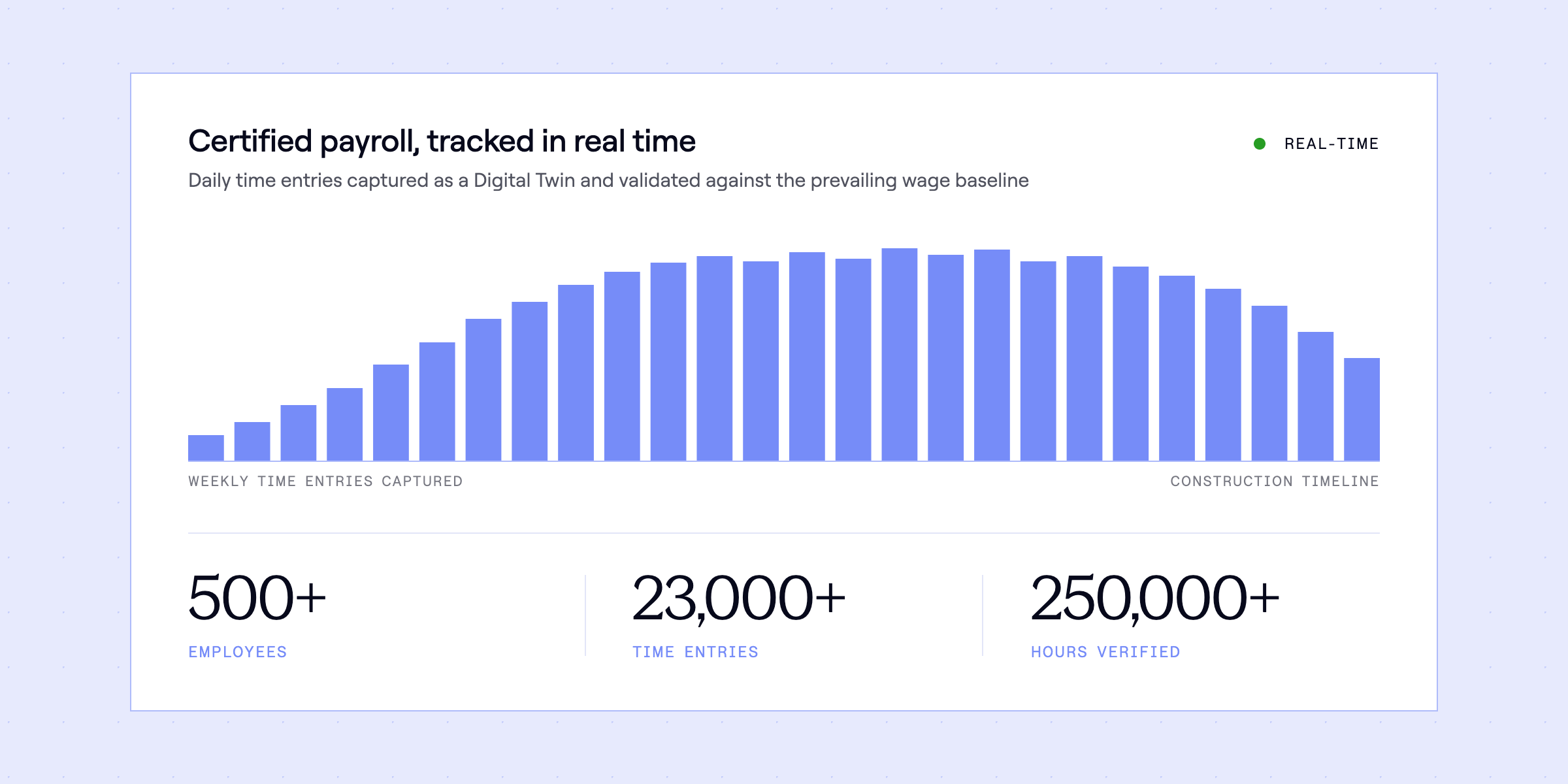
Throughout construction, daily time entries flow from contractors into Euclid's platform, where each project's labor profile is captured as a Digital Twin, the most granular PWA reporting infrastructure on the market. For UBS's portfolio, this meant tracking daily time entries across 500+ employees, totaling 23,000+ entries and 250,000+ labor hours verified against the prevailing wage baseline.
Weekly stakeholder meetings keep contractors, EPCs, ESIF's investment team, and legal counsel aligned on open items. Euclid runs the weekly compliance review, walks through open RFIs and discrepancies, and tracks corrections through the platform until each entry is closed. Time entries that fall below the prevailing wage trigger correction workflows; missing apprentice hours surface against ratio targets in real time; classification mismatches get flagged before they propagate through subsequent payroll cycles.
The alternative is the version that played out for most ITC-eligible projects in 2023 and 2024: certified payroll piles up in spreadsheets and contractor portals, no one validates against wage determination until close, and the compliance review at financing becomes a months-long fire drill that delays funding and threatens the bonus credit.
- Daily time entries captured and validated against wage determination
- Apprentice participation tracked weekly against IRA ratio targets
- Open RFIs and discrepancies routed to contractors with full context
- Weekly stakeholder reviews aligning capital markets, legal, and EPCs
4. Model penalty exposure and prepare Good Faith Effort defense
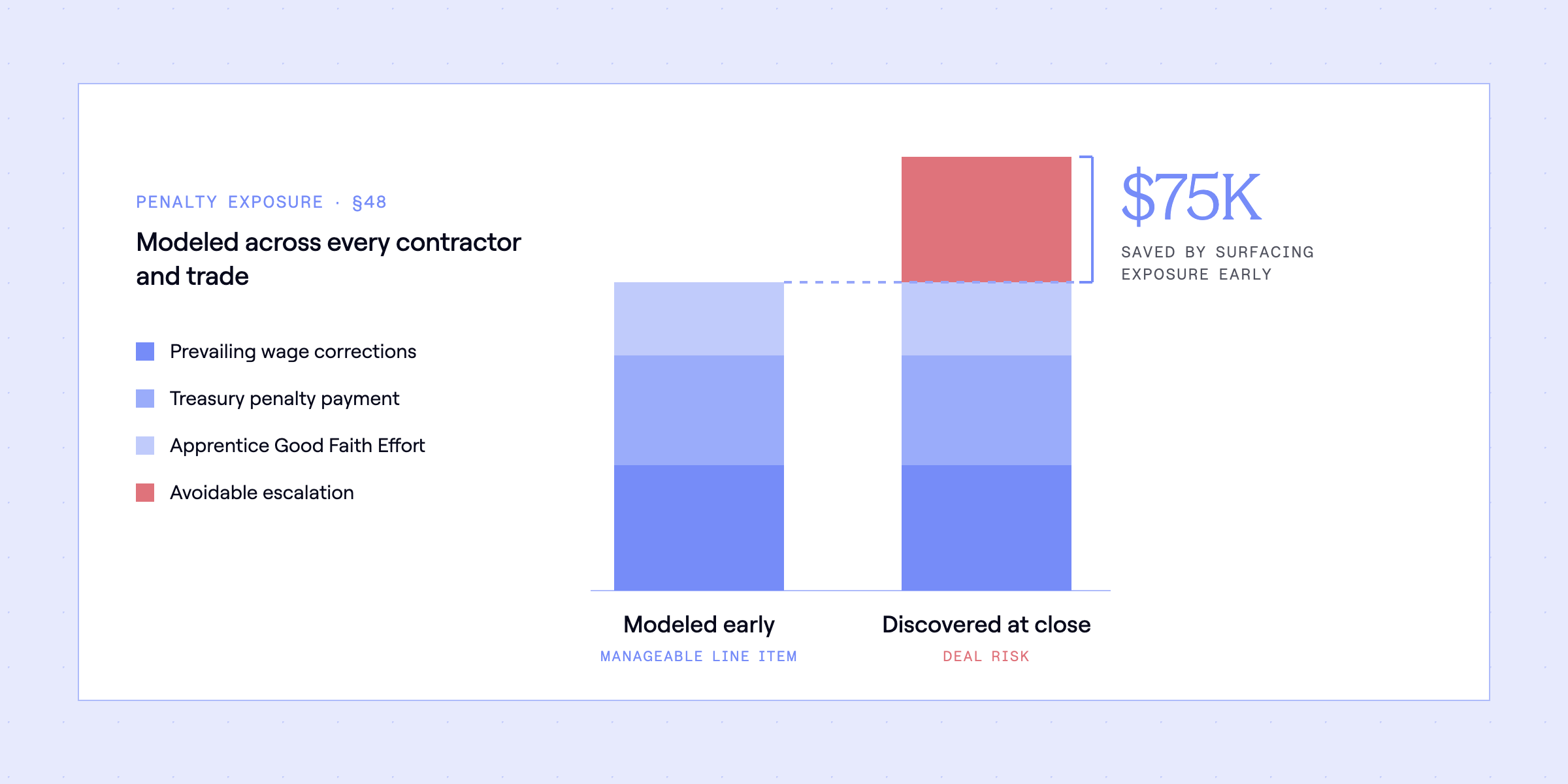
As substantial completion approaches, Euclid models penalty exposure under Section 48 (or 48E) across every contractor and every trade. Where prevailing wage gaps exist, the platform calculates correction payments owed to affected workers and the additional penalty payment owed to Treasury. Where apprentice ratio gaps exist, Euclid assembles the Good Faith Effort documentation and calculates associated penalties lenders and tax equity investors require to preserve the credit.
For UBS, this work surfaced penalties early enough that ESIF could remediate proactively rather than reactively, saving $75K against what those same gaps would have cost if discovered during financing diligence or post-close audit. Correction payments were processed, Good Faith Effort packages were assembled, and the compliance record was cleaned up before lenders' counsel ever opened the data room.
This is where most projects either lose ground or get the credit in full. Penalty exposure modeled in advance is a manageable line item; penalty exposure discovered at close is a deal risk.
5. Deliver the financing-ready IRA Labor Compliance Report
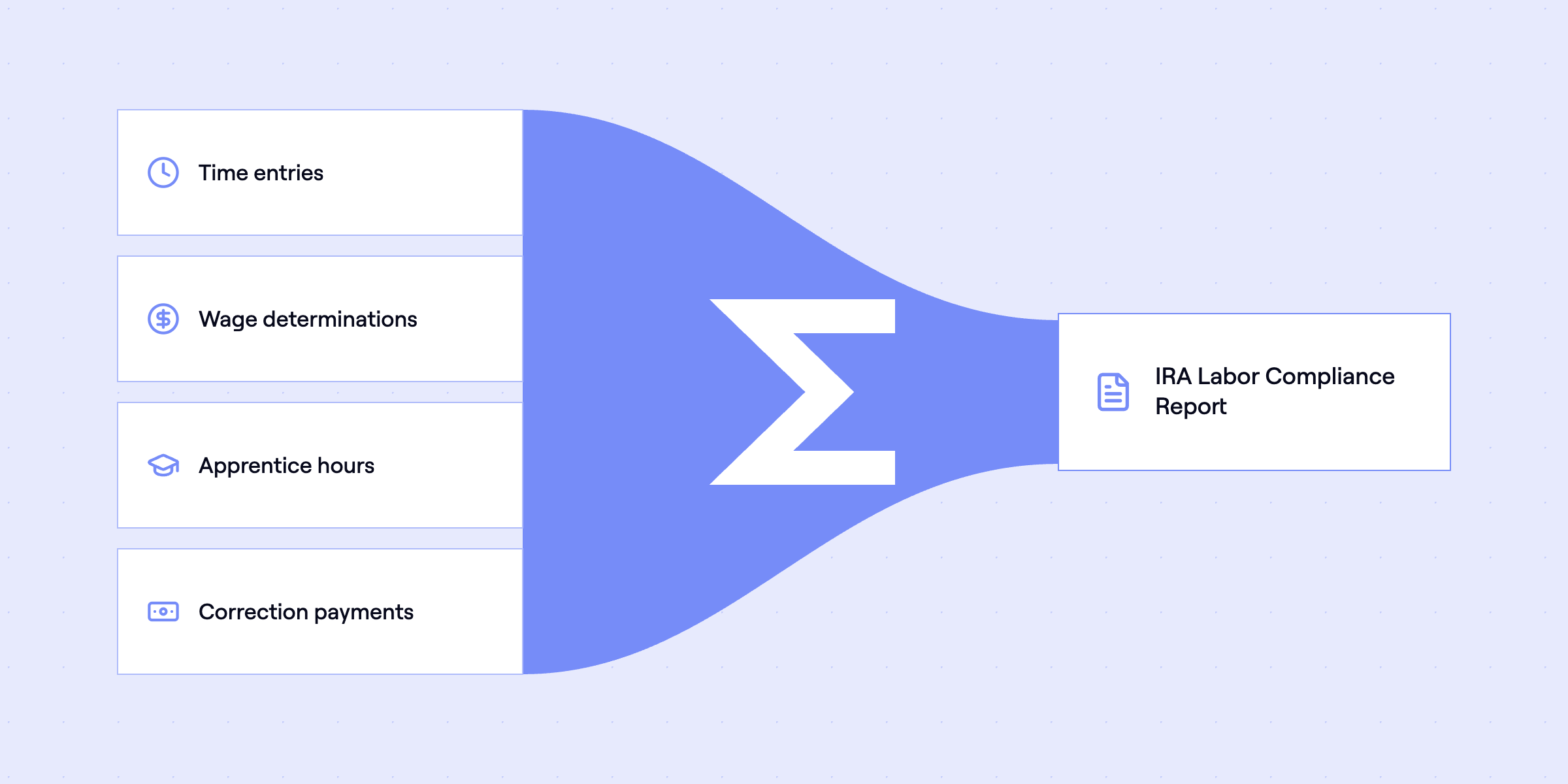
At close, Euclid produces the final IRA Labor Compliance Report, the single document that lenders, ITC transfer buyers, tax equity investors, and lenders' counsel rely on to fund the deal. The report ties every time entry, every wage determination, every apprentice hour, and every correction payment back to the underlying source documentation, providing the audit trail required for bonus credit qualification.
For UBS, the final report supported a 5-lender facility, two ITC transfer buyers, preferred equity, and specialized insurance across the 1 GWh portfolio. The compliance record assembled across the full project lifecycle, including contractor onboarding, weekly tracking, and penalty modeling, flowed directly into the financing diligence package. No separate compilation phase. No last-minute scramble. No remediation cycle delaying funding.
The same report stands up to IRS audit defense post-close, with the full Digital Twin record preserved as the source of truth for the 5-year recapture period.
