How Apollo built a repeatable diligence engine that aligns multiple counterparties
Decision-ready findings across dozens of DG projects and millions in transaction value
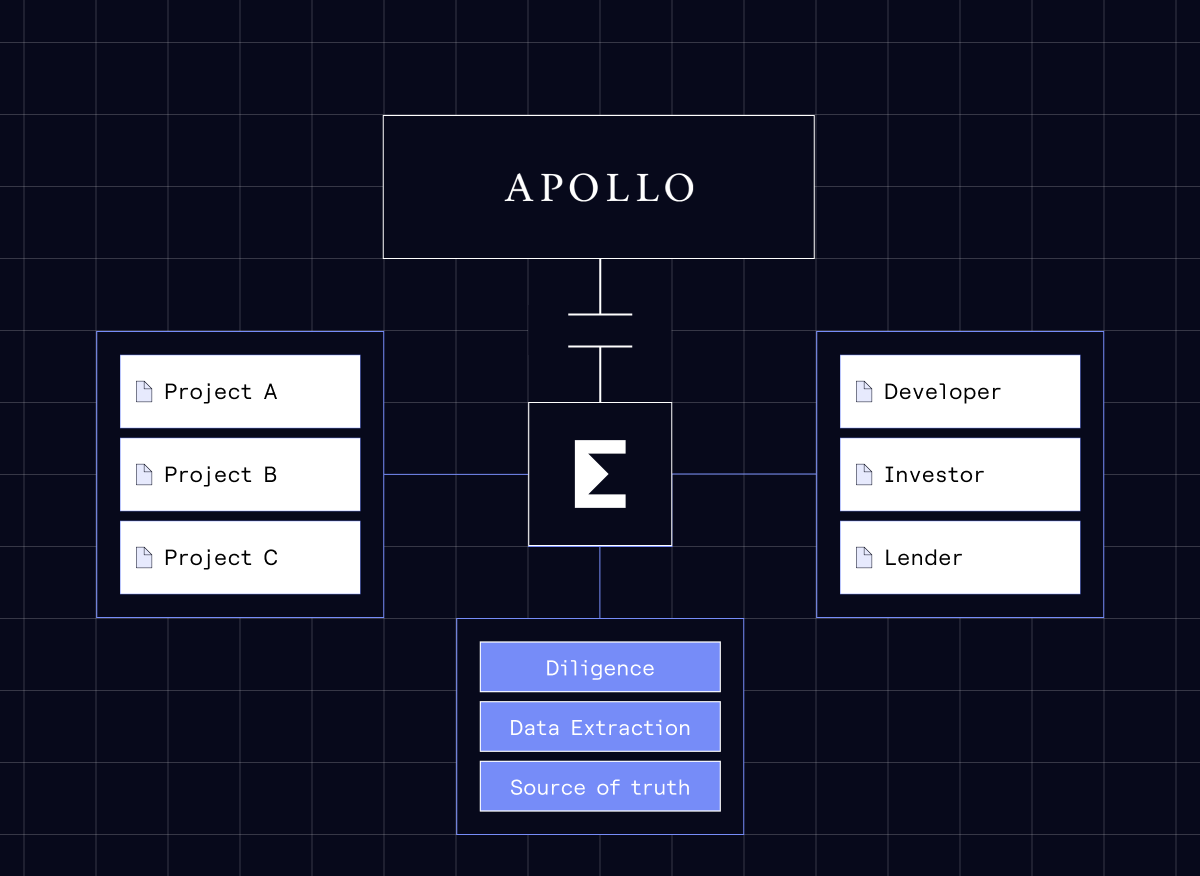
Apollo is a global alternative asset manager with equity and debt investments across distributed generation (DG) and utility-scale projects. Their DG investment group deploys large amounts of capital into a market that offers strong returns but carries matching downside risk: every investment means diligencing a high volume of small projects, each with its own technical, commercial, and financial profile. With multiple joint ventures, co-investors, and lenders reviewing the same project records, Apollo's lean team needed a way to run rigorous diligence at scale without becoming the bottleneck in data management or stakeholder coordination.
Since early 2025, Euclid has served as both diligence team and system of record for Apollo's development joint venture with Summit Ridge Energy in Illinois. Over the past year, Euclid has run decision-ready diligence on dozens of projects representing millions of dollars in transaction value, giving Apollo a single, repeatable workflow that keeps their team, lenders, partners, and legal counsel aligned without the version churn and coordination drag that slow deals down.
The structural challenge is baked into the asset class. In DG, each project is small enough that one-off diligence processes don't scale — but every project still carries real risk in the details. When multiple parties are reviewing the same documents across different milestones, the window for version confusion, duplicated effort, and misaligned assumptions widens with every new project added to the portfolio.
How Apollo works with Euclid
Apollo's DG investment group deploys capital through development joint ventures and co-investment structures, each involving multiple counterparties reviewing the same project records. Their investment team works with Euclid to run repeatable diligence across these partnerships without scaling headcount or sacrificing rigor.
- Run a developer-agnostic diligence process that works at the same standard regardless of which developer, joint venture, or counterparty is on the other side of the table, so Apollo doesn't rebuild the workflow every time a new partnership comes online
- Centralize diligence across multiple parties so stakeholders stay aligned on the same project record without creating bottlenecks or version confusion — including Apollo's lenders, legal counsel, and lender's counsel.
- Deliver technical and commercial diligence that ties project documents to the financial model, confirming that key financial drivers are supported by project documentation and industry best practice.
As a result, Apollo runs diligence on dozens of DG projects at a pace that matches their deployment targets while maintaining the rigor their investors and lenders expect. All backed by Euclid's team of deep industry experts and a workflow that preserves a complete audit trail from intake through funding.
A single project, end to end
Here's what Euclid's diligence process looks like for a single project in Apollo's joint venture with Summit Ridge Energy, from the moment a project reaches NTP through decision-ready findings and funding.
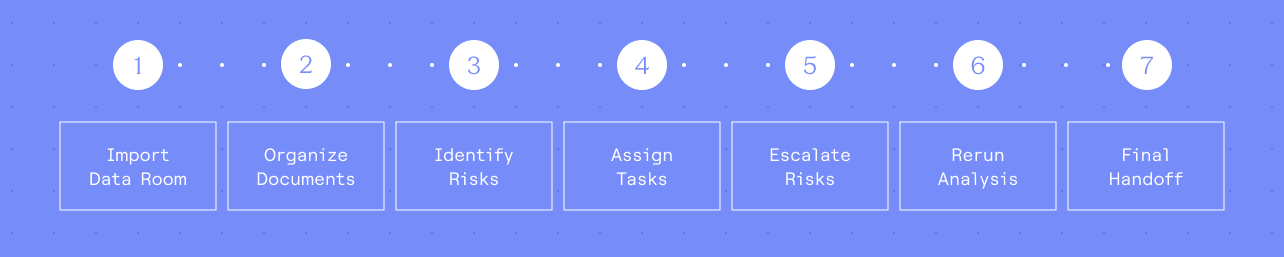
Euclid ingests the project data, organizes it into a consistent structure, and extracts key details to validate against the financial model. From there, Euclid manages RFIs with the developer and flags any unresolved risks for Apollo to decide on. At substantial completion, Euclid reruns the same workflow against as-built data.
While every project and risk profile is different, the workflow stays consistent so Apollo can move capital efficiently without losing rigor or stakeholder alignment.
1. Import project documents into Euclid's platform
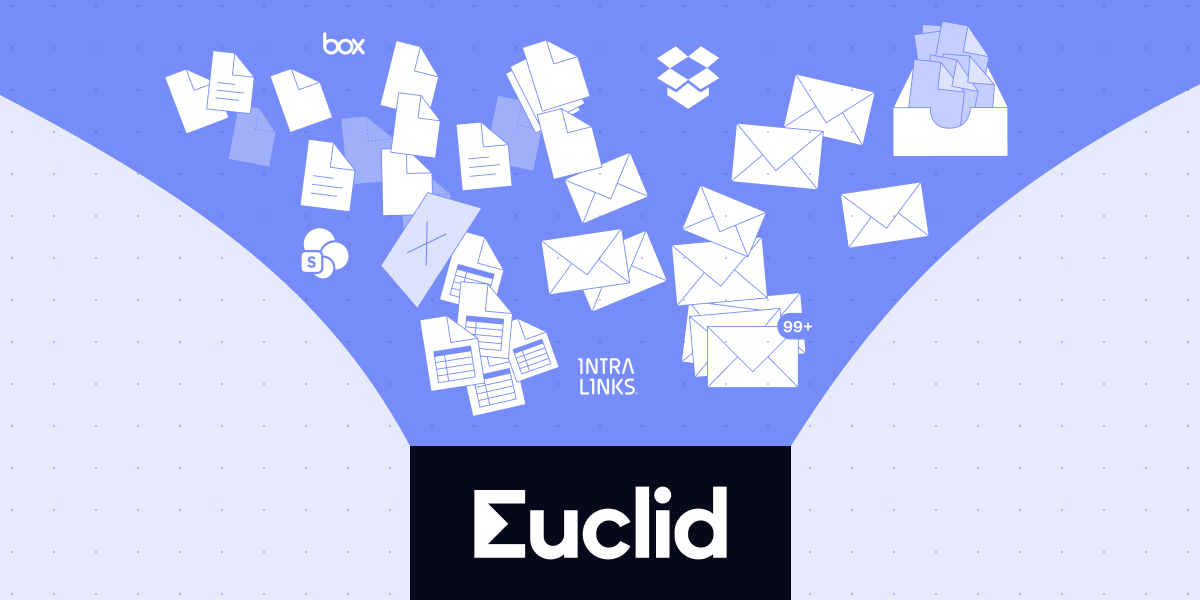
When a project reaches notice to proceed (NTP), Summit Ridge Energy alerts Euclid and submits the initial project data and documentation. Euclid ingests everything into the platform and compares it against a standard required-documents list to identify what's present, what's missing, and what needs follow-up.
Without a structured intake process, documents arrive in different formats from different teams — scattered across email, shared drives, and developer portals. No two handoffs look the same, and the gaps aren't always obvious until someone downstream needs a document that was never uploaded. That variability slows diligence and increases the risk of missed context when multiple parties need to work from the same project record.
Euclid's intake creates a consistent starting point for every project, so Apollo and its stakeholders can begin diligence from a reliable baseline without rework.
2. Organize documents with consistent structure and taxonomy
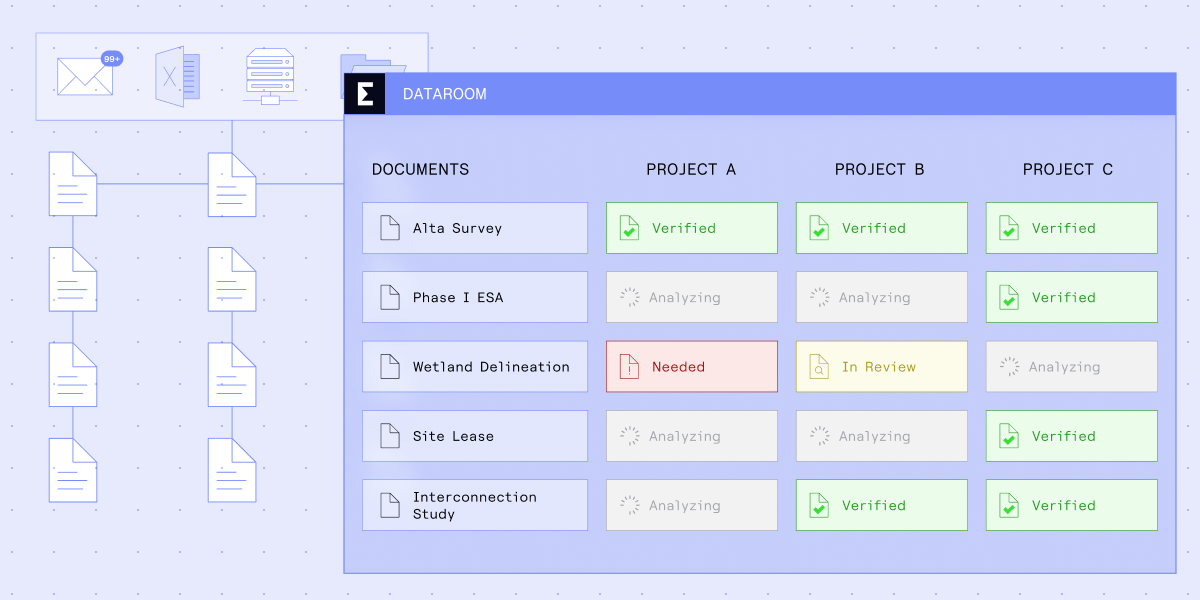
Euclid maps each project's documents into a consistent taxonomy — organizing files by category rather than mirroring the folder structure the developer used. This means interconnection agreements, off-take contracts, site control documents, environmental reports, and construction documentation all land in the same place, structured the same way, regardless of which project they came from.
This structure gives every stakeholder (e.g. Apollo's investment team, lenders, and legal counsel) a shared view of what's required, what's complete, and what's still outstanding. Instead of fielding status-check calls or reconciling competing document sets, each party works from the same organized record.
From there, Euclid runs an initial red-flag review to surface early project risks and generates the first round of RFIs, creating a foundation for the deeper extraction and validation work that follows.
3. Extract and validate project data against the financial model
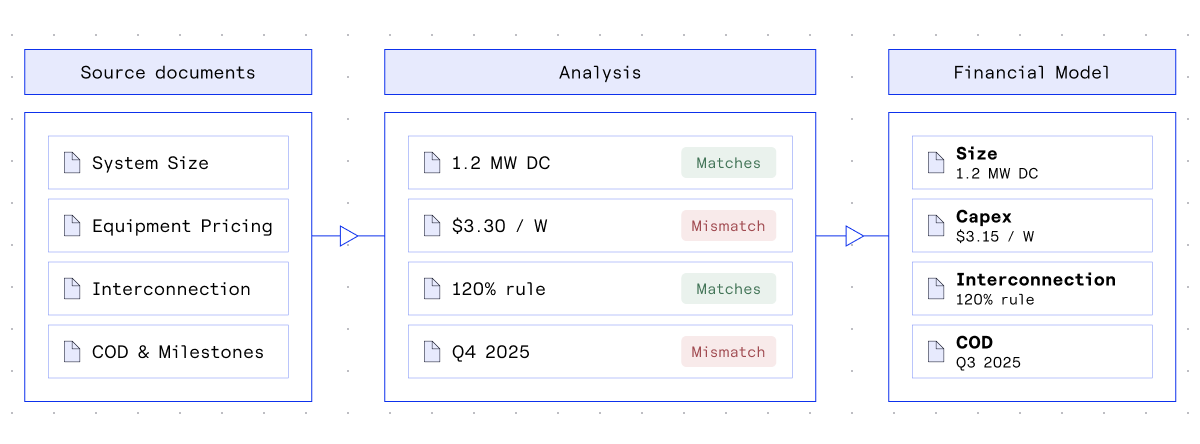
Euclid locates and extracts key project attributes and development risk items from SRE-provided documents before the financial model is available. This includes details like system size, equipment specifications, interconnection terms, off-take pricing, and site conditions — the inputs that ultimately drive the investment case.
Once the financial model arrives, Euclid uses those extracted details as a reference point to validate key model inputs, flag discrepancies, and confirm that assumptions are supported by source documentation. This creates a direct, auditable link between the model and the underlying project documents so key investment drivers are verified for Apollo, its investors, and counsel.
Catching errors and inconsistencies at this stage — before they flow into underwriting, deal terms, or funding decisions — is where diligence creates the most value. Without this step, model assumptions can drift from project reality, and the gap often isn't caught until it affects investment outcomes.
4. Assign RFIs to resolve document gaps and discrepancies
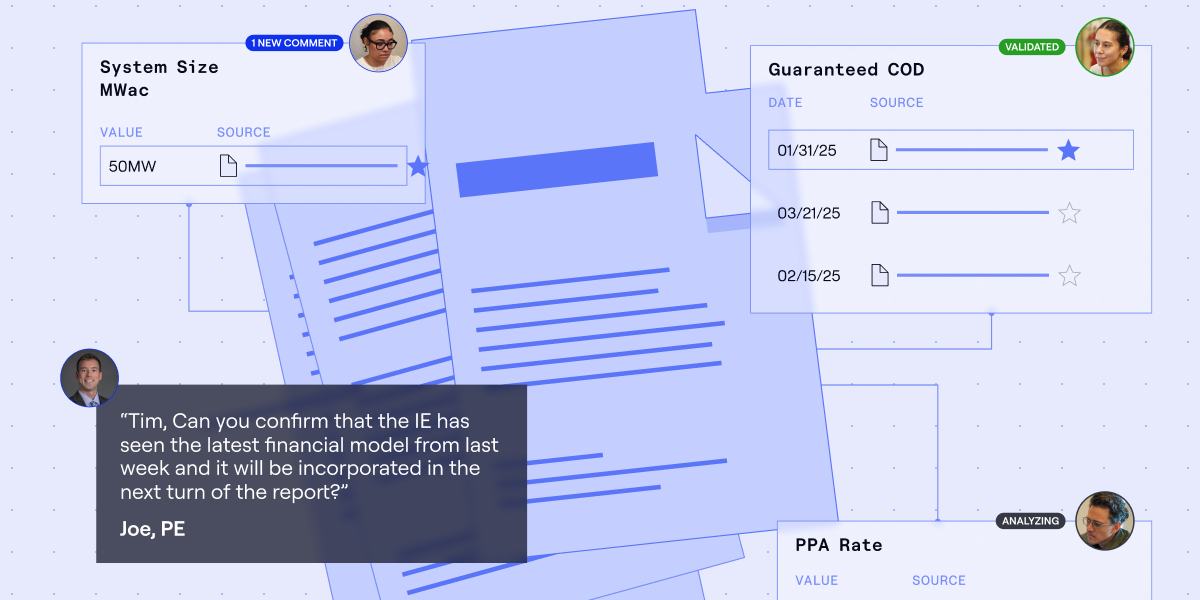
Once Euclid flags a discrepancy or gap, it drafts an RFI to address missing documents, potential development or commercial risk, and inconsistent model inputs, then assigns it to SRE directly in the platform. Each RFI stays linked to the supporting documents so everyone is working from the same source of truth.
SRE responds to RFIs and uploads revised documents and model updates directly in Euclid. Euclid monitors each thread as it moves toward resolution — either closing the item when it's addressed or following up until there's a clear answer.
This keeps the entire Q&A process in a single, real-time location instead of scattered across email chains and separate trackers. As documents evolve and workstreams run in parallel, that centralized approach reduces version confusion and duplicated effort — and creates a clean audit trail as the project moves forward.
5. Escalate unresolved risks for Apollo's review
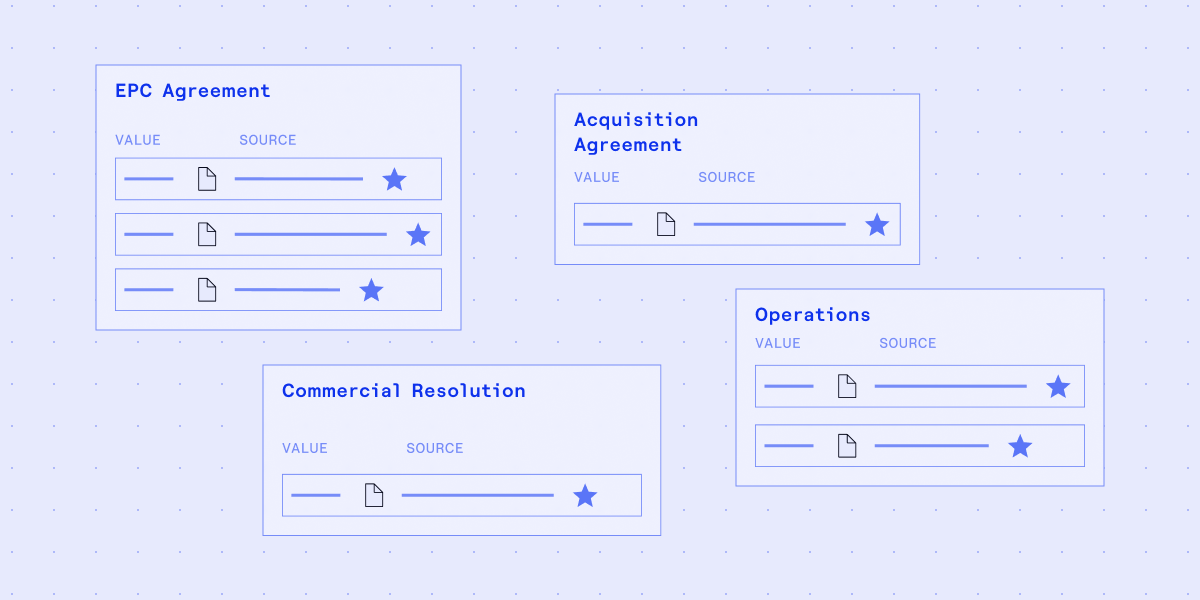
Not every issue can be resolved with additional documentation or a revised model input. When an RFI surfaces a persistent open item or a material risk, Euclid escalates it to Apollo for review and disposition.
Each escalated risk is presented with the supporting context — what was flagged, what the developer's response was, and what remains unresolved — so Apollo can make funding decisions with confidence that the details have been validated and exceptions are clearly identified.
This mirrors the approach Euclid uses across its diligence engagements: surface the risk, provide the context, and let the investor decide — rather than burying unresolved items in a long RFI tracker where they're easy to miss under deadline pressure.
6. Close and fund the project with a complete audit trail
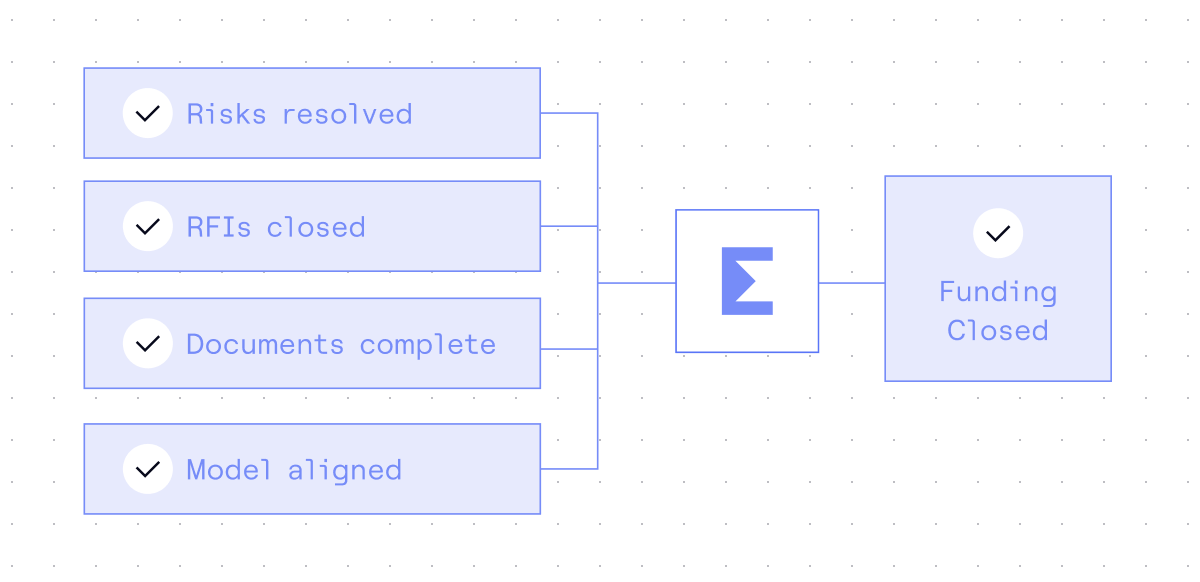
Once all necessary items are resolved and open risks have been dispositioned, the project reaches close and is funded. Euclid provides a complete audit trail of diligence findings, RFI resolution, and stakeholder alignment so Apollo, its investors, and legal counsel have a shared record that preserves context for post-close execution.
This shared record matters because the parties involved at funding — lenders, counsel, investors — need to trust that the diligence was thorough and that nothing was lost between intake and close. The audit trail connects every document, every question, and every decision back to the source, so no one needs to reconstruct the diligence story after the fact.
7. Rerun diligence at substantial completion
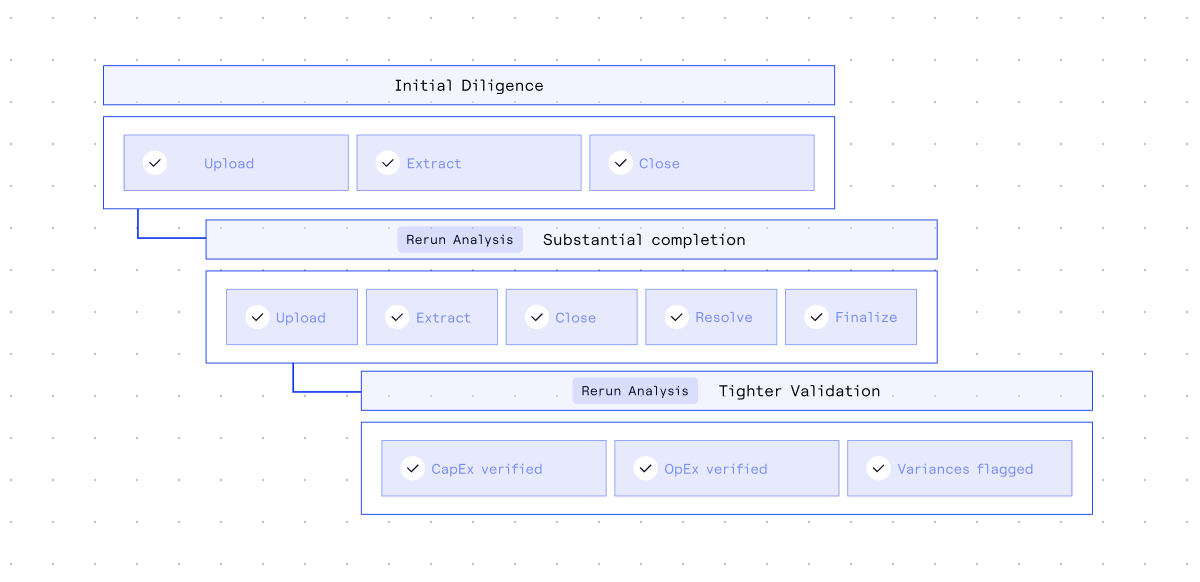
When a project reaches substantial completion (SC), Euclid reruns the diligence workflow with a tighter focus on validating development-stage assumptions against real, as-built data. Instead of relying on estimates, Euclid verifies whether the model's key drivers — especially CapEx and OpEx — are now supported by actual invoices, contracts, and operating documentation.
Any variances are flagged for Apollo's review, the model is updated accordingly, and the same audit trail captures the SC-stage findings alongside the original diligence record. This gives Apollo the same level of rigor and stakeholder alignment at each funding milestone without rebuilding the process from scratch. This step is unique to Apollo's workflow. Most diligence engagements end at initial close, but Apollo's structure requires validation at multiple milestones — and the repeatable workflow means Euclid can rerun the process efficiently rather than treating each milestone as a new engagement.
The infrastructure behind this workflow with organized project records, centralized RFIs, validated model inputs, and a complete audit trail is what lets Apollo run diligence on dozens of projects without scaling headcount or losing rigor. Instead of managing a different process for every project and every counterparty, Apollo runs one engine that scales with the portfolio.
