How Luminace Built a Faster Transactions Engine
Driving a 350%+ increase in MW conversion

Most acquisition teams are not constrained by deal flow. They are constrained by lack of process, tools, or execution bandwidth to accelerate diligence. Luminace was no different. They had aggressive capital deployment targets, a lean team, and a steady stream of portfolios that needed fast, high-quality due diligence within short time windows.
Since 2021, Euclid has helped Luminace move faster through diligence while driving a 350% increase in MW conversion, meaning a much larger share of megawatts under LOI make it through diligence and reach close. Instead of rebuilding a new process for every seller data room, Luminace runs a repeatable diligence workflow that keeps documents, RFIs, risks, and decisions connected, even as volume scales and timelines stay tight.
.png)
Over the past few years, Luminace has evaluated portfolios at high throughput across a wide range of sellers and projects. At that scale, diligence has to run like a repeatable engine, not a one off scramble.
How Luminace works with Euclid
Luminace is a high-volume acquirer of distributed generation and IPP-style projects. Their Development team is responsible for moving quickly on target acquisitions while coordinating across sellers, advisors, and external stakeholders.
Euclid’s team helps Luminace do three things consistently:
- Streamline acquisition execution through a repeatable transaction workflow in a single workspace.
- Deliver deep commercial, technical, and financial diligence to ensure quality in what Luminace is buying.
- Create cleaner handoffs after acquisition, especially for projects that are not yet built, by translating diligence outputs into a structured record that engineering, construction, and operations teams can act on.
As a result, most of Luminace’s projects run through Euclid for due diligence, enabling a process that is faster, more informed, more consistent, and decision-ready, backed by Euclid’s decades of first-hand experience in renewable transactions
A single project, end to end
Here’s what Euclid’s diligence process looks like on a single project, from the moment an LOI is signed through decision-ready findings and handoff.
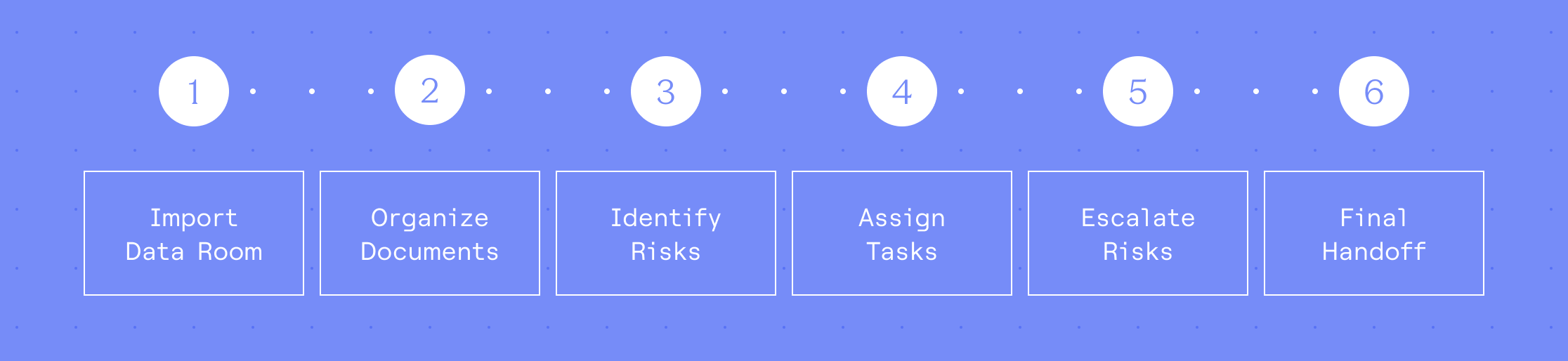
Euclid starts by importing the seller’s documents and organizing them into a consistent structure so everyone works from the same source of truth. From there, Euclid helps Luminace identify risks, assign tasks to resolve gaps, escalate unresolved items into a decision-ready risk register, and complete a final handoff that preserves context for downstream teams.
While every seller data room and risk profile is different, the workflow stays consistent so Luminace can move fast without losing fidelity or context.
1. Import seller’s data room into Euclid
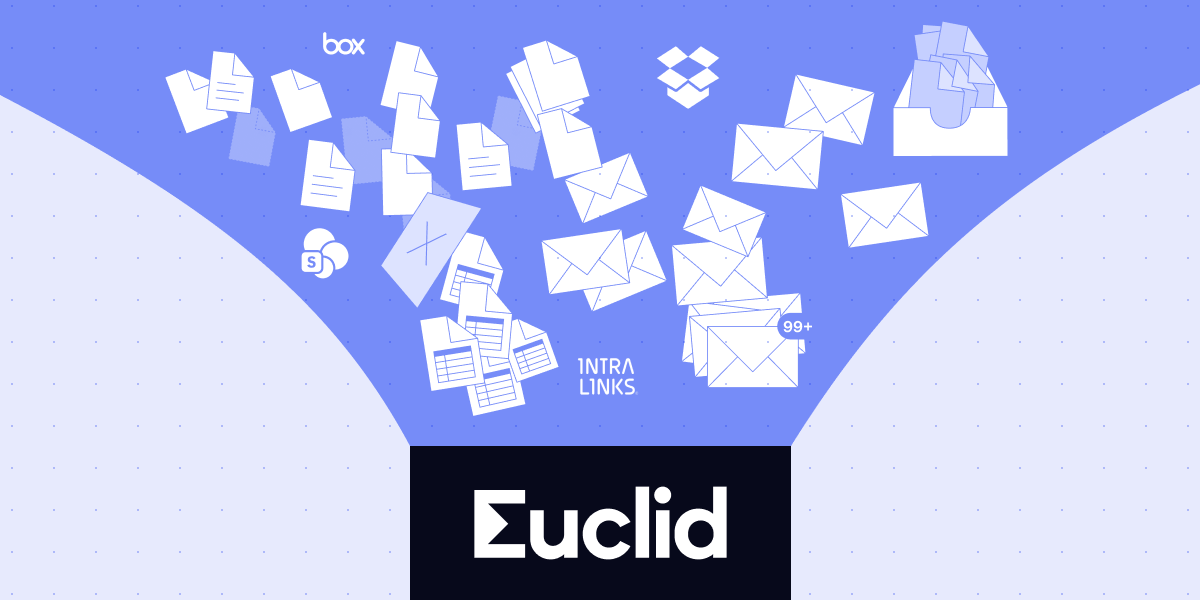
Once an LOI is signed, the deal enters a diligence window, often 45 to 90 days. The seller shares a virtual data room — usually hosted in Box, SharePoint, Dropbox, Intralinks, or similar tools — with Euclid’s team.
The challenge is that no two data rooms are organized the same way. Some are buried in deeply nested folders. Others are full of duplicates, empty folders, and inconsistent file names. Sellers also keep uploading new documents midstream. That variability slows diligence and increases the risk of missed context when multiple parties need to work from the same project record.
Euclid solves this by importing the seller’s data room into a single workspace and standardizing it into a consistent structure that Luminace can rely on across every deal.
2. Organize documents with consistent structure and taxonomy
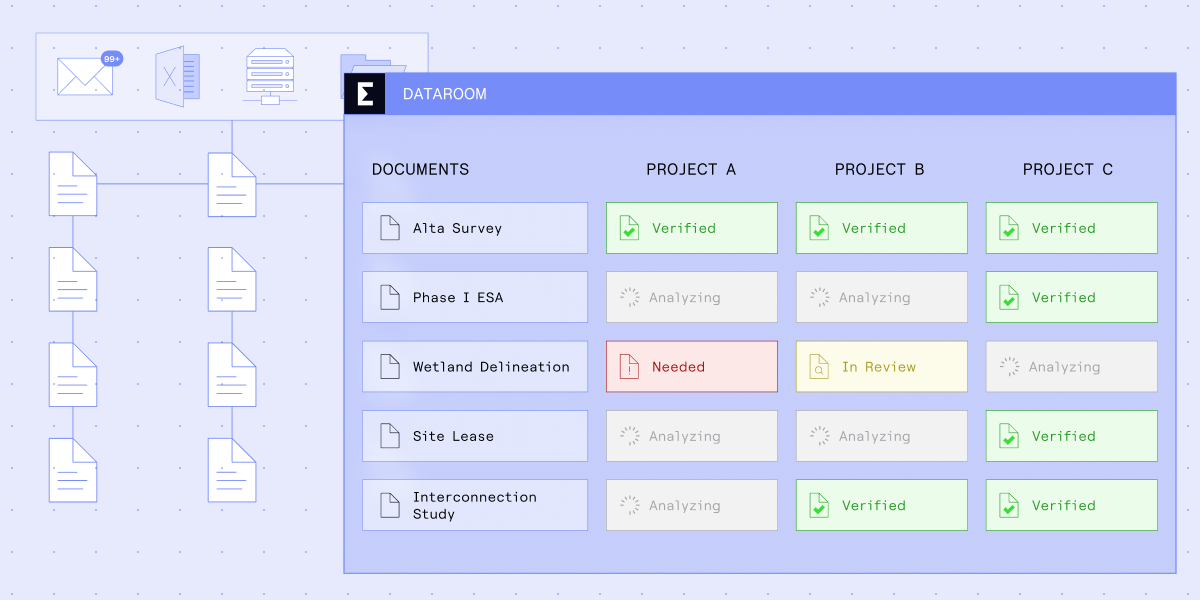
Euclid’s team imports seller documents into Euclid and organizes them into a consistent structure. Documents are mapped into Euclid’s taxonomy, instead of the seller’s folder logic, which streamlines due diligence for Luminace as they evaluate dozens of projects in a given year.
The version notes in Euclid clarify what each document is without requiring anyone to infer meaning from file names. Key details are extracted so Euclid’s team can highlight key financial drivers and identify discrepancies across project documents.
3. Identify risks and discrepancies with due diligence
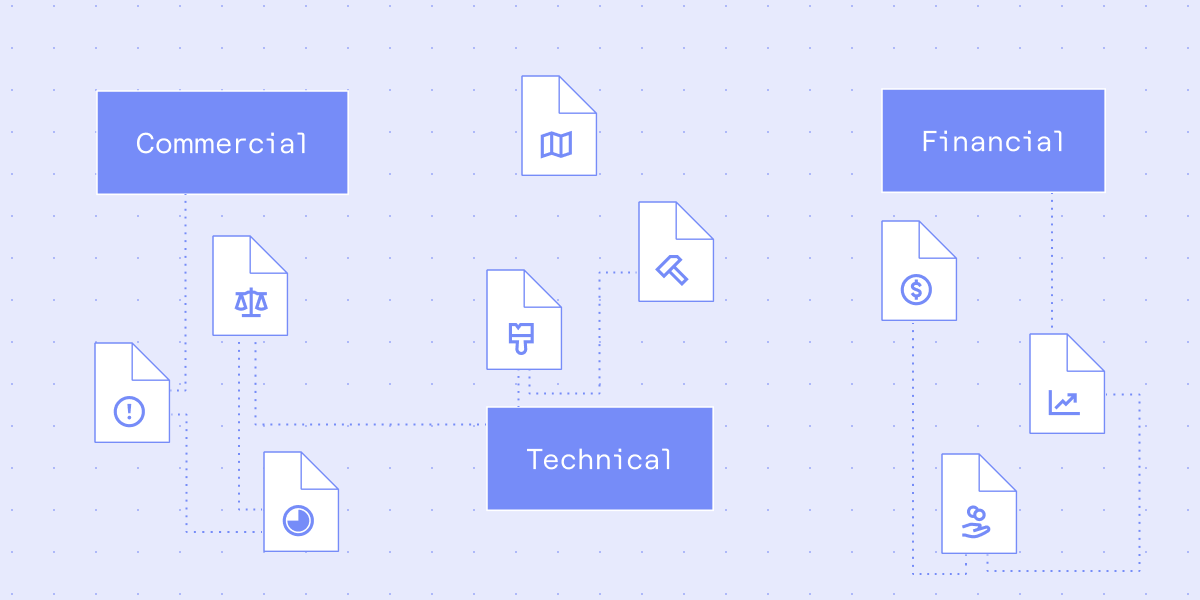
Euclid helps Luminace turn a seller data room into a decision-ready diligence record. By classifying documents into a consistent structure and extracting the details that matter, Euclid surfaces inconsistencies, gaps, and risks early enough to shape underwriting, deal terms, and execution plans. This work happens at the intersection of commercial, technical, and financial diligence:
- Commercial: Critical contract terms, counterparty obligations, milestones, pricing mechanics, and enforceability signals that impact risk and value
- Technical: Design and engineering artifacts, interconnection status, permitting pathway, site control details, and buildability considerations that affect schedule and delivery
- Financial: Key assumptions and constraints that flow into valuation, cash flows, and financing readiness
This is where Euclid differs from a single-thread specialist. A lawyer may focus on legal form and negotiation. An independent engineer may focus on engineering validity. Euclid connects these threads to answer the buyer’s core question: What is the real risk profile of this project, and what does it change about price, terms, and post-close execution?
When questions arise, Euclid captures them as RFIs in the platform and ties each one to the supporting documents. RFIs are assigned to the seller, resolved through structured back-and-forth, or escalated into the risk register. That linkage creates a shared source of truth and a clean audit trail.
Traditionally, this lives across a data room, a separate Q&A tracker, and long email chains. In Euclid, the questions, documents, and decisions stay connected as timelines compress and workstreams run in parallel.
4. Assign tasks to owners to resolve document discrepancies

Once Euclid flags a discrepancy, it becomes an actionable task in the platform. Each task is assigned to an owner, typically the seller, but sometimes an internal stakeholder or external advisor, depending on who can provide the missing information.
Euclid routes these tasks as RFIs so the right person can respond in context. Each RFI stays linked to the supporting documents, so everyone is working from the same source of truth and the full thread is easy to audit later.
As responses come in, Euclid either closes the item if it is resolved or keeps the thread moving with follow-up questions until there is a clear answer.
5. Escalate unresolved RFIs into risks and mitigation plans
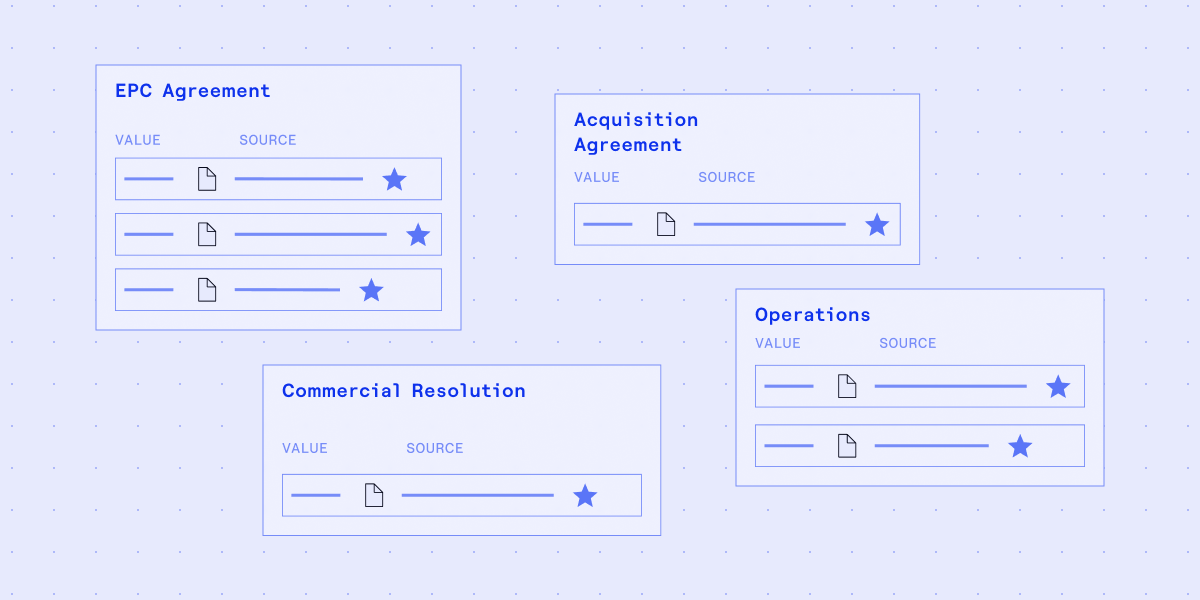
If a task cannot be resolved, Euclid converts that into a risk in the “Risk Register” so Luminace can decide how that risk should affect underwriting and deal terms. Every risk is tagged with the most likely path to mitigation:
- EPC Agreement: Address it in the construction contract so responsibilities are clear
- Acquisition Agreement (e.g. Conditions precedent, representations and warranties): Require the seller to fix it before closing or comply with post-closing
- Commercial resolution: Renegotiate pricing, timing, or scope with the seller
- Operations: Treat it as a post-close item and manage it operationally
6. Handoff without losing context
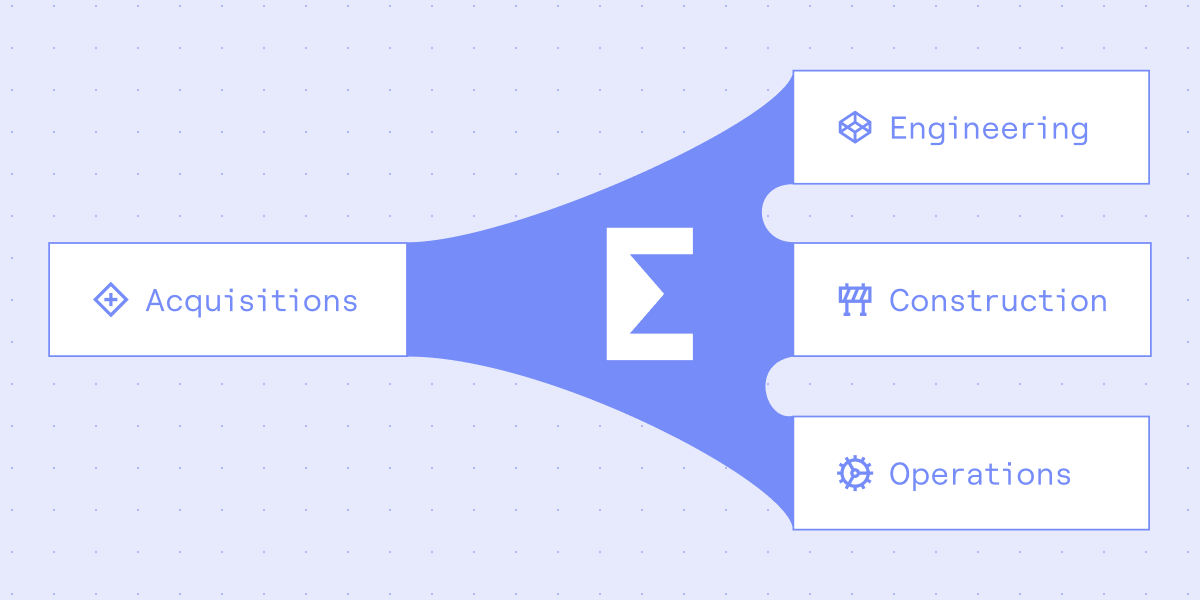
Many acquired projects are still in development when acquired. Euclid helps bridge the transition from acquisitions into engineering and construction, and enables quicker financing. For operational assets, the same structure supports a cleaner transition into operations.
This solves a common acquisition pinch point. It is not only “What are we buying?” It is also “How do we ramp our teams on this without losing the diligence context?”
